
Concern
Treatment for Jowls
Jowls are areas of sagging skin and soft tissue that develop along the lower jawline as part of natural aging. As the skin, fat compartments, and supporting structures of the lower face lose volume and elasticity, tissue descends below the mandibular border and the jawline can appear heavier, less defined, or older. Collagen and elastin decline, weakening facial retaining ligaments, redistribution of fat, and resorption of the underlying jawbone all contribute. Where the tissue sits shapes the treatment plan: descent in front of the jawline can often be softened from above with volume, while tissue that has fallen below the jaw border asks to be lifted and re-secured. At Aesthetx, we offer injectable options for earlier jowling and perform facelift and neck lift surgery, including deep plane technique.
At a Glance
- Jowl formation involves deflation of the jowl fat compartments and weakening of the mandibular septum, allowing fat to sag below the jawline[1]
- Mandibular bone resorption in the prejowl region reduces skeletal support, and jowls may appear at a younger age in individuals with a naturally smaller chin[2]
- Approximately 77,933 facelift procedures were performed in the United States in 2025, with volume growing 13% year over year[4]
- Non-surgical skin tightening procedures cannot achieve the same degree of improvement as surgical options like facelift or neck lift[3]
- Collagen breakdown rate increases while collagen synthesis decreases with age, and elastin production declines steeply after age 40 to 50[1]
Signs & symptoms
- Sagging or drooping skin along the lower jawline
- Loss of definition between the jaw and neck
- Visible fullness or pouching below the mandibular border
- Deepening of marionette lines extending from the mouth corners
- Uneven or asymmetric jawline contour
- Skin laxity and reduced firmness in the lower face
- Blunting of the cervicomental angle (jaw-to-neck transition)
- Appearance of a "double chin" in some individuals
What causes Jowls
- Decreased collagen and elastin production with age
- Weakening and stretching of the masseteric cutaneous ligament
- Weakening of the mandibular retaining ligament
- Deflation of the superior and inferior jowl fat compartments
- Resorption of mandibular bone in the prejowl region
- Loss of dermal thickness and skin resilience
- Gravitational effects on aging facial tissues
- Repetitive facial movements contributing to soft tissue laxity
Risk factors
- Age (changes typically become noticeable in the 40s and 50s)
- Cumulative sun exposure and UV-related photoaging
- Smoking and tobacco use
- Genetic predisposition to facial aging patterns
- Significant weight fluctuations or rapid weight loss
- Naturally thin facial bone structure (microgenia)
- Hormonal changes, particularly those associated with menopause
- Poor nutrition and chronic dehydration
How it's assessed
- Visual assessment of the jawline and lower face
- Evaluation of skin elasticity and tissue laxity
- Assessment of facial bone structure and volume loss
- Review of patient goals and cosmetic concerns
- Photographic documentation for treatment planning
- Assessment of overall facial aging pattern
How is Jowls treated
Several approaches can address jowls:
Treatment
Learn moreInjectable Dermal Fillers
Injectable dermal fillers are FDA-approved medical devices for patients who want to restore facial volume, soften wrinkles, or enhance…
Treatment
Learn moreLaser Treatment
Laser treatment uses focused light energy for people seeking to address scars, acne, acne scarring, hyperpigmentation, melasma, red stretch…
Treatment
Learn moreFacelift
A facelift, or rhytidectomy, is a surgical procedure for patients seeking to address sagging tissues and visible signs of aging in the…
Treatment
Learn moreNeck Lift
A neck lift, also known as a lower rhytidectomy or platysmaplasty, is a surgical procedure that improves the appearance of the neck by…
Treatment
Learn moreChin Augmentation
Chin augmentation is a surgical procedure for people seeking greater chin projection and contour to improve facial balance and harmony. It…
Recovery & outlook
- Jowls are a natural part of facial aging and tend to progress over time without intervention
- Surgical approaches such as facelift can produce significant and long-lasting improvement
- Non-surgical treatments may slow progression or provide modest tightening
- Results from minimally invasive procedures are typically more subtle than surgical options
- Combination approaches addressing multiple layers of facial aging often yield the best outcomes
Frequently Asked Questions
- Jowls are areas of sagging skin and soft tissue along the lower jawline. They form as facial ligaments weaken, fat compartments change, and collagen and elastin decline, allowing tissue to descend below the jaw. Sun exposure, genetics, and lifestyle factors can accelerate these natural aging changes.
- Common signs include sagging or pouching along the lower jawline, less definition between the jaw and neck, deepening marionette lines extending from the corners of the mouth, and a less defined cervicomental angle. These changes typically become more noticeable in the 40s and 50s.
- Jowls result from several changes occurring together. The skin loses firmness as collagen and elastin decline, facial ligaments weaken, fat compartments deflate, and the jawbone can lose volume in the prejowl area. Sun exposure, smoking, genetics, and significant weight fluctuations can accelerate these changes.
- See a board-certified dermatologist or plastic surgeon if jowls affect your confidence, you want to explore treatment options, or you notice rapid or asymmetric changes in facial contour. A specialist can evaluate your anatomy and recommend surgical or non-surgical approaches suited to the degree and pattern of change.
- Treatment ranges from non-invasive procedures to surgery. Non-surgical approaches include dermal fillers, radiofrequency or ultrasound skin tightening, and thread lifts. For moderate to severe jowling, facelift or neck lift surgery can produce more significant and longer-lasting improvement. The appropriate approach depends on the degree of laxity and whether the primary change is tissue descent, volume loss, or both.
- Jowls cannot be entirely prevented because they develop through natural aging, but their progression can be slowed. Consistent sun protection, avoiding smoking, maintaining a stable weight, eating a balanced diet, and using topical retinoids may help preserve skin firmness and delay visible jowling.
- Recovery depends on the treatment. Non-invasive radiofrequency and ultrasound tightening typically require no downtime, while thread lifts may cause a few days of mild swelling. A surgical facelift or neck lift generally requires two to four weeks of recovery before returning to normal activities, with full results becoming visible over several months.
- Fillers and surgery address different stages of the same change. Filler and biostimulator placed along the jawline and in the deflated midface can restore the shelf that descending tissue has lost, creating a cleaner-looking jawline without lifting tissue, and this can suit moderate descent well. Once tissue hangs below the jaw border, adding volume nearby can increase the fullness it was intended to disguise, leaving the face fuller without making it look fresher. A surgical lift instead repositions the tissue and tightens the layer beneath it. An assessment distinguishes between these states and determines whether the discussion belongs around volume restoration or lifting rather than around a particular product.
- Facelift techniques differ according to the layer in which the surgeon works. A deep plane facelift releases the retaining ligaments that tether the cheek and jaw, then moves the deeper soft-tissue layer as a unit. The correction therefore comes from repositioning volume rather than placing tension on the skin. This distinction matters in the lower face because a jowl is a ligamentous change before it is a skin change, and it is part of why deep plane results tend to look natural. Deep plane facelift is among the techniques we perform. The technique suited to your face depends on tissue thickness, skin quality, and how much of the change comes from descent versus deflation, which are findings established during examination.
Your Physicians

Dr. Kamakshi Zeidler
MD, FACS
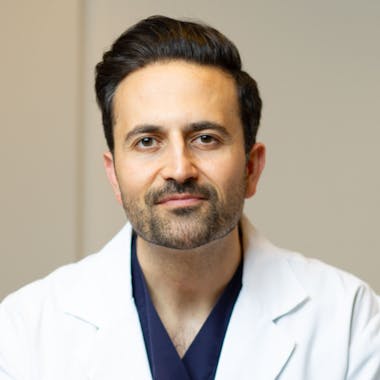
Dr. Dino Elyassnia
MD, FACS

Dr. Jane Weston
MD, FACS
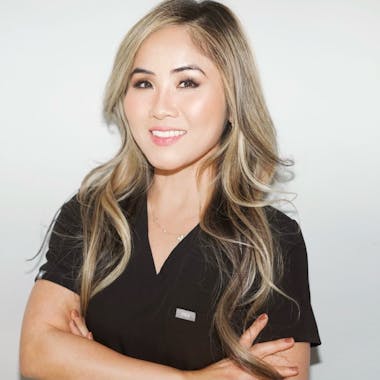
Dr. Bao Tran
MD

Dr. Shirley Liu
MD, MHS

Dr. Michele Koo
MD, FACS

Dr. Rick Lehman
MD, FACS

Dr. Jean Gillon
MD, FACS

Dr. Amelia Hausauer
MD, FAAD
9 board-certified physicians · 4 locations
Sources & references
This article draws on 6 sources, including government health agencies, peer-reviewed research, leading medical institutions.
Government & research
Medical institutions
Educational & general
Medically reviewed by Dr. Kamakshi R. Zeidler, MD, FACS · Last reviewed: 2026-10-10