Contact Us Today Schedule a Consultation
Unsure where to begin? Our experts can guide you.
Book Now
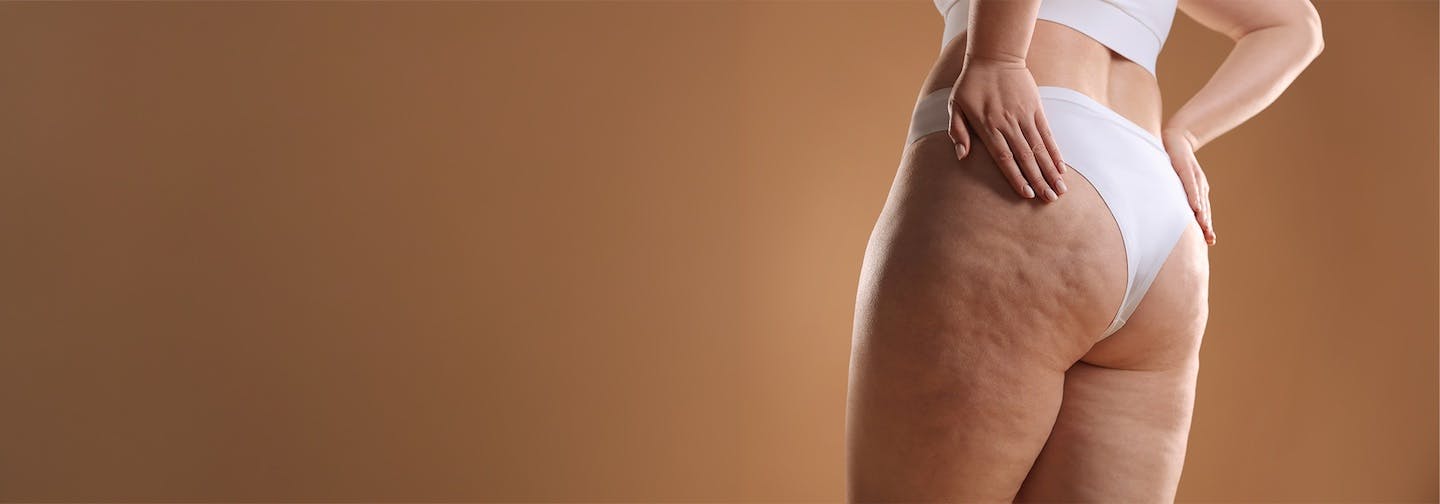
Cellulite is common and harmless, caused by fibrous bands called septa that tether the skin and create dimples. Treatments aim to release or soften those bands, thicken skin, or both. No option "cures" cellulite, but several can meaningfully reduce dimpling, with varying cost, downtime, and durability.
True cellulite, the "orange-peel" look, comes from fibrous bands beneath the skin that pull downward while fat pushes upward, creating characteristic dimpling. Women are more prone because these bands often run perpendicular to the skin surface. This is distinct from skin laxity, which people sometimes call "cellulite" when describing loose or crepey skin on the thighs or arms; laxity results from loss of skin elasticity and volume rather than tethered fibrous bands. Treatments for true cellulite work by releasing these bands, thickening skin, or modifying fat and the deeper skin layers, not by "melting fat alone", while skin laxity typically requires different approaches focused on tightening and collagen stimulation.
If you're exploring cellulite treatments, you'll find options ranging from completely non-invasive to minimally invasive, each with different levels of effectiveness, downtime, and how long results last. Here's what you need to know about the most effective treatments available today.
While technically minimally invasive rather than non-invasive, Avéli is worth knowing about because it's performed in-office with minimal downtime and delivers some of the most predictable results available. This FDA-cleared procedure directly targets and releases the fibrous bands causing your dimples through tiny entry points under local anesthesia.
What makes Avéli different is the real-time verification, your provider can tension each dimple, confirm exactly which band is responsible, and release it with precision. You're not guessing which bands to treat. The entire procedure is completed in a single session, and most patients return to normal activities within days. Clinical data support improvement lasting through 12 months, with recovery involving bruising and tenderness for one to three weeks.
Sofwave uses ultrasound energy to deliver controlled heat to the deeper skin layers, tightening the dermis and improving overall texture. This treatment is popular because it's well-tolerated, requires no downtime, and you can return to your day immediately after. Most patients see results after just one to two sessions.
Sofwave works best for mild to moderate skin laxity and cellulite when you want noticeable improvement without any recovery period. Keep in mind that results are temporary, and you'll likely need maintenance treatments to sustain your improvement.
Subcision is a minimally invasive procedure where a small needle or blade is used to release the fibrous bands that pull down on the skin and create cellulite dimples. When combined with biostimulatory fillers like Sculptra or Radiesse, the treatment not only releases these tethered bands but also stimulates your body's own collagen production over time, improving skin thickness and texture from within. For deeper depressions, Renuva, an off-the-shelf adipose matrix, can be injected to restore volume and encourage your body to regenerate its own fat tissue in the treated area.
This combination approach works best for moderate to severe cellulite with visible dimpling caused by fibrous bands. You may experience some bruising and swelling, with a few days of downtime. Results develop gradually over several weeks as collagen builds, and because the structural bands are physically released, improvements tend to be longer-lasting than surface-level treatments alone. Some patients benefit from a series of sessions depending on the extent of their cellulite.
For more significant cellulite concerns, surgical subcision can be combined with body contouring and fat transfer for comprehensive results. During this procedure, the fibrous bands causing dimples are surgically released, while liposuction removes unwanted fat from problem areas. That harvested fat is then purified and strategically reinjected to smooth out depressions and restore volume where needed, creating a more even contour.
This combination approach works best for moderate to severe cellulite, particularly when there's also unwanted fat in surrounding areas and visible volume loss contributing to an uneven appearance. Because it's a surgical procedure, expect more downtime, typically one to two weeks of recovery with bruising, swelling, and compression garments. However, results are more dramatic and longer-lasting than non-surgical options since the structural cause of the dimpling is addressed while simultaneously improving overall body shape. Some patients may need touch-up treatments as the body heals and settles over several months.
Results from cellulite treatments vary depending on the approach. Procedures that physically release the fibrous bands, like Aveli or subcision, permanently remove those bands, offering long-lasting structural correction. However, because skin continues to age and new bands can form over time, touch-up treatments with biostimulatory fillers may be recommended every two to three years to maintain optimal results and continued collagen support. Factors like your body's healing response, the severity of your cellulite, and lifestyle factors such as weight fluctuations can also influence how long your improvement lasts.
Yes, and many patients achieve their best results by combining cellulite treatments with body contouring procedures. Cellulite and excess fat are different issues; cellulite is caused by fibrous bands pulling on the skin, while body contouring addresses fat volume and shape. Treating both can create smoother, more sculpted results than addressing either alone.
Common combinations include pairing Avéli or subcision with liposuction and autologous fat grafting (AFG), a powerful approach where fibrous bands are released, unwanted fat is removed and transferred to fill depressions, resulting in both structural correction and improved contour. Non-invasive options can also be combined, such as pairing energy-based cellulite treatments with fat-reduction procedures. The timing and sequencing depend on your specific goals and anatomy. Some providers recommend addressing cellulite first, then contouring; others prefer the opposite order or a staged approach.
During your consultation, discuss your full aesthetic goals so your provider can create a comprehensive treatment plan. Combining procedures may also offer practical benefits like shared recovery time and potentially reduced overall cost compared to separate treatments.
Subcision methods physically release the bands tethering skin. Lasers release bands and stimulate collagen production. Radiofrequency and acoustic wave treatments improve skin quality but typically require a series of sessions. Single-session subcision approaches report durability through 12 months; some methods show longer data in select studies.
|
Treatment Type |
Sessions |
What It Does |
Typical Durability |
Notes |
|
Device-guided subcision |
1 |
Targets and releases specific bands |
Up to 12 months |
Minimally invasive; local anesthesia |
|
Acoustic wave therapy |
6-8 |
Stimulates tissue remodeling |
Temporary; durability uncertain beyond 1 year |
Useful add-on treatment |
|
Topical creams (retinol, caffeine, etc.) |
Daily |
Surface smoothing |
Short-term; modest effect |
Best paired with lifestyle changes |
Why the differences? Subcision methods physically remove the mechanical tether, causing dimples. Energy devices mostly remodel skin and may not address every culprit band.
Expect immediate release of specific dimples, with gradual smoothing as swelling fades. Bruising and tenderness are common for about one to three weeks; most daily activities can resume quickly, per your provider's advice. Single-session subcision procedures are one-and-done; energy-based devices require a series plus maintenance. Photograph yourself under consistent lighting to judge real change, not day-to-day fluctuations.
Prioritize "dimple mapping" over chasing "fat loss." Identifying and treating each culprit band yields more predictable improvement than generalized fat-focused treatments, because cellulite is structural, not merely about fat.
Creams, massage, dry brushing, and at-home devices can temporarily smooth skin or enhance circulation, but changes fade without ongoing use. Use them as add-ons to clinic treatments or to keep skin hydrated and firm. Be skeptical of "miracle" claims; look for dermatologist-vetted guidance.
If you want noticeable, efficient improvement with single-session convenience, discuss targeted subcision procedures with a qualified provider. If you prefer non-invasive options, radiofrequency or acoustic-wave series can help, knowing they require maintenance. Match the treatment to your type of dimpling, and set goals around reduction, not perfection.
If you're ready to take the next step toward smoother skin, the board-certified specialists at Aesthetx are here to help. Our team combines advanced techniques with personalized care to create a treatment plan tailored to your unique goals. Whether you're considering Avéli or exploring other cellulite solutions, we'll guide you through your options and help you achieve natural-looking results.
Schedule your consultation today and discover why Aesthetx is the Bay Area's trusted name in aesthetic medicine.