Contact Us Today Schedule a Consultation
Unsure where to begin? Our experts can guide you.
Book Now
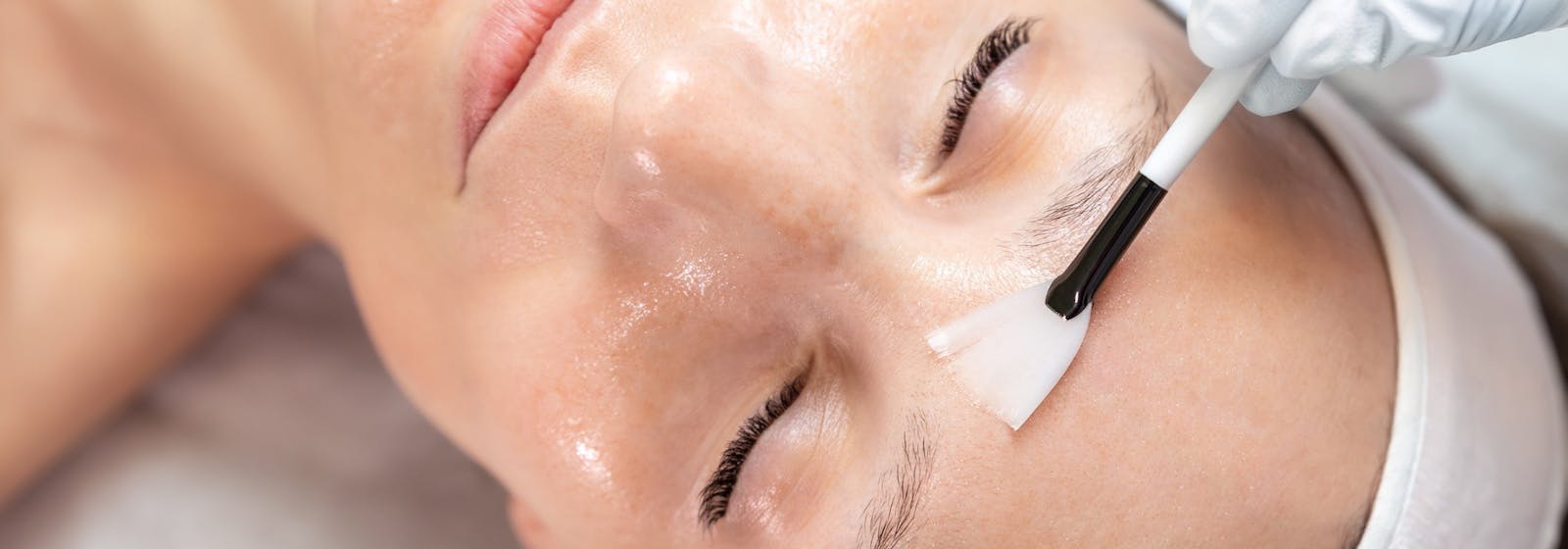
This article covers deep chemical peels, what they are, how they work, who they're for, and what to expect before, during, and after treatment. It explains how deep peels differ from superficial and medium peels, their benefits for wrinkles, sun damage, and acne scarring, typical costs, recovery timelines, and how they compare to alternative treatments like microneedling and DiamondGlow.
A deep chemical peel is an advanced skin resurfacing treatment designed to address deeper skin concerns beyond the surface level. It can help improve skin texture, reduce wrinkles, and correct pigmentation issues when traditional skincare routines no longer deliver noticeable results. Facial changes over time are completely natural, but many people begin to wonder when those gradual shifts in texture, tone, and firmness call for something more advanced than a traditional skincare routine.
As a medical treatment that requires special training, a deep chemical peel uses a potent chemical solution to remove damaged layers of skin and stimulate deeper regeneration. This treatment is designed to treat more advanced skin concerns, such as deep wrinkles, significant sun damage, and acne scarring.
Superficial peels exfoliate only the outermost layer of skin, but c referred to as the epidermis. Medium-depth peels reach the upper dermis, and deep chemical peels extend to the lower dermis. The deeper action targets more dramatic correction of texture and tone, but also requires more preparation, expertise, and recovery time.
Deep chemical peels are reserved for cases in which lighter treatments and rejuvenation techniques are unlikely to achieve the desired level of facial appearance and improvement. Few physicians are trained to perform them. In terms of depth and effect, superficial and medium-depth peels are comparable to fractionated laser treatments, while deep peels are analogous to fully ablative CO2 or erbium laser treatments.
A deep chemical peel works beneath the surface to restore and rebuild the skin, targeting gradual changes such as etched lines, uneven tone, and textural irregularities. Rather than simply exfoliating the outer layer, a deep chemical peel removes damaged and irregular skin cells from both the epidermis and portions of the dermis.
Long-term sun damage, collagen breakdown, and scarring can remain embedded within deeper layers of the skin and gradually become more visible at the surface over time. Through controlled injury in the chemical peel process, a healing response replaces damaged layers with newly regenerated skin that is smoother, more uniform, and structurally stronger. One patient described the result as a "total skin reboot" - feeling as though she was starting over with completely fresh skin.
As the skin repairs, collagen production increases, helping restore support in deeper layers. With stronger collagen support and more uniform cell turnover, skin may appear rejuvenated with smoother texture, improved elasticity, and a more even tone.
This process can lead to noticeable improvement in:
Over time, the skin not only maintains a more refined, youthful appearance but also functions more efficiently, retaining hydration better. In this, the skin reflects light more evenly, showing fewer signs of aging, damage, and dullness. Rather than offering temporary exfoliation, a croton oil peel promotes long-term structural renewal, with results continuing to evolve for several months as the skin remodels.
The depth of any chemical peel depends on the strength of the solution, which directly influences which layer is treated and the level of correction that can be achieved.
Superficial peels work within the epidermis, where concerns such as dullness, mild discoloration, and uneven texture originate. In the epidermal layer, the focus is on refreshing the skin's surface by accelerating natural cell turnover.
A medium-depth peel can extend into the upper dermis, where early collagen breakdown begins. In this, the focus is on improving fine lines, noticeable pigmentation, and mild structural irregularities, as the solution stimulates collagen renewal.
Further down in the skin, deep chemical peels reach the mid to lower dermis, or the underlying layer, where more established changes are often present. This typically includes deep wrinkles, long-standing sun damage, and structural collagen irregularities. With a deep chemical peel, treatment of the dermis allows for more significant correction, since it targets the underlying framework of the skin rather than the surface.
Depth plays a key role in facial peels, as stronger formulations influence both the level of correction and the amount of recovery required. A croton oil peel treatment offers more visible, long-term improvement but requires careful technique, preparation, and healing time to support smooth, even results.
Individuals seeking more significant corrections of advanced skin concerns are typically candidates for a deep chemical peel. However, since the solution reaches deeper layers of the skin, candidacy depends on factors such as skin characteristics and the ability to heal safely.
Candidacy for a deep chemical peel depends on a combination of skin concerns, skin type, and the ability to heal and follow aftercare safely.
|
Factors |
Good Candidate |
May Not Be Suitable |
|
Skin Concerns |
Deep wrinkles, etched lines, severe sun damage, acne scars, uneven texture |
Mild concerns that respond to lighter treatment |
|
Skin Tone |
Lighter skin tones |
Darker skin tones |
|
Skin Condition |
Generally healthy skin without active infection or irritation |
Active acne, infections, or compromised skin barrier |
|
Healing Ability |
Able to follow strict aftercare and downtime |
History of poor wound healing or keloid scarring |
|
Health Status |
Medically cleared and appropriate for deeper resurfacing |
Certain medical conditions or risk factors require caution |
|
Expectations |
Seeking long-term, more dramatic improvement |
Quick results with minimal downtime |
A careful evaluation is part of the preparation phase before a deep chemical peel and other facial rejuvenation services. Patients with darker skin tones are typically unable to undergo a chemical peel due to an increased risk of hyperpigmentation. Factors such as skin type and healing capacity are important to consider in the evaluation process, since they can influence both safety and quality of results.
Preparation plays a major role in how evenly the peel penetrates the skin and how well healing occurs afterward. A structured pre-treatment plan can help reduce complications and support favorable results.
These steps focus on optimizing skin condition and minimizing risk before undergoing a deeper resurfacing treatment.
|
Factors to Consider |
What to Expect |
Why It Matters |
|
Medical Evaluation |
Review of health history and any additional screenings |
Ensures treatment is appropriate and safe |
|
Medication Review |
Evaluation of current medications and supplements |
Identifies any medications that may interfere with healing or increase risk |
|
Treatment Restrictions |
Avoid waxing, exfoliating products, or other resurfacing treatments |
Prevents skin sensitivity and ensures controlled peel depth |
|
Skincare Prep |
Use of retinoids and Plated Intense for one month pre-peel, with a pigment-regulating agent added depending on the patient's skin. |
Helps create an even skin surface and reduces the risk of post-treatment discoloration |
|
Sun Protection |
Use of a daily broad-spectrum SPF, avoiding sun exposure before treatment |
Minimizes inflammation and lowers the risk of uneven results |
|
Antiviral Prophylaxis |
Preventive medication for patients with a history of cold sores |
Reduces risk of HSV reactivation during healing |
In the weeks leading up to treatment, patients are often placed on a medical-grade skin care regimen to condition the skin. Some measures, including antiviral medication and strict SPF recommendations, may begin before the procedure and continue into recovery to support safe and consistent healing. At Aesthetx, preparation is tailored to each patient's skin type, concerns, and medical history to ensure that all treatments are performed safely and effectively.
A deep chemical peel is a controlled medical procedure designed to treat the skin beneath the surface while maintaining safety and uniform results across different areas of the face.
The consultation stage begins with a review of skin and medical history, followed by thorough skin cleansing and skin preparation. Anesthesia options are discussed at the time of consultation, with a recommendation tailored to each patient's specific needs. Some procedures can be safely performed in the office with topical anesthetic and oral sedation, while others are best performed in the operating room under a light general anesthetic.
The face is divided into targeted zones to identify differences in areas of skin thickness and sensitivity. This allows the provider to adjust the peel strength and assess the number of applications needed in a single area, ensuring uniform, natural outcomes.
A solution, such as Croton Oil Peel, is applied slowly and strategically, in controlled strokes, to the skin. The provider monitors visual endpoints in the skin, such as frosting and tigehtening, that may help guide depth and ensure consistent reach.
Areas of deep wrinkling or scarring may require additional passes, while thinner or more delicate regions are treated with fewer passes. A layered approach allows for precise correction without over-treating sensitive skin areas.
Whether performed in the operating room or the office, heart rate and EKG are monitored throughout the procedure. Chemical absorption can cause cardiac arrhythmias, making close monitoring and a slow, methodical technique essential for patient safety.
After the treatment, you will receive detailed guidance on cleansing, occlusion, sun avoidance, and when you may reapply makeup. Most full-face treatments take 60-90 minutes.
Careful technique and real-time adjustments throughout the procedure help ensure consistent results across different areas of the skin. A combination of planning, monitoring, and controlled application is a major factor in safety and high-quality outcomes with our skilled dermatologist.
Deep chemical peels can be safe and effective when performed by an experienced provider. These treatments are more intensive than other resurfacing treatments and require precise technique and careful patient selection.
Treatments such as Croton Oil Peel are performed with controlled, strategic strokes along the skin. A skilled physician makes adjustments across different skin areas to achieve even results and reduce risks.
|
Risk Factor |
What It Means |
|
Pigmentation Changes |
Lightening or darkening, especially in higher Fitzpatrick skin types |
|
Healing Variability |
Redness and recovery time vary by patient and treatment depth |
|
Scarring |
Uncommon, but possible in adverse reactions or healing disruption |
|
Systemic Exposure |
Managed through controlled application and monitoring in larger treatments |
|
Infection/HSV Reactivation |
Temporary increased risk while the skin barrier is compromised |
Provider experience plays a significant role in both safety and outcomes. Deep chemical peels are highly technique-dependent and require expertise to adjust strength and application based on a patient’s individual skin characteristics.
Here’s an overview of different facial rejuvenation tools, varying in intensity and coverage to achieve desired skin goals, compared with our Croton Oil Peel.
|
Treatment |
Downtime |
Target Factors |
Longevity/Sessions |
|
Superficial Peel |
Minimal |
Dullness, mild discoloration |
Series of treatments every 4-6 weeks for maintenance |
|
Medium Peel (TCA) |
Moderate |
Pigmentation, early and mild texture changes |
May require 1-3 treatments; results may last months to years |
|
Croton Oil (Deep Peel) |
High |
Deep wrinkles, scarring, sun damage |
Often, a single treatment with long-term results |
|
DiamondGlow |
Minimal |
Congestion, skin glow |
Ongoing monthly treatments recommended |
|
Microneedling |
Low-moderate |
Mild to moderate scarring and texture |
Series of 3-6 treatments; maintenance as needed |
|
Laser |
Moderate to High |
Wrinkles, texture, pigmentation, scarring |
Single or series of treatments; results can last years, depending on depth. |
Recovery is staged after a deep chemical peel, with an initial healing phase and gradual improvement over several months.
In recovery, planning and consistency are important. Most patients should expect 8-12 days of visible healing, followed by several months of residual redness as the skin continues to recover. Strict sun protection and adhering to aftercare directions will influence healing and final results.
Healing time can vary based on treatment depth, individual skin response, and adherence to post-procedure guidance. Follow-up visits at Aesthetx are typically scheduled to monitor progress, address any concerns, and provide guidance during recovery.
Results from a deep chemical peel are long-lasting because the treatment reaches deeper layers of the skin and supports structural collagen renewal rather than temporary or superficial resurfacing.
Longevity and maintenance factors include:
Long-term results typically depend on how well the skin is maintained. Daily sun protection is always recommended along with a routine skincare regimen to preserve improvements and support overall skin quality over time.
For patients concerned about facial skin laxity with aging, a deep chemical peel may help achieve mild tightening and improved skin quality. Despite this, additional treatments may be needed for more comprehensive facial rejuvenation. In some cases, approaches such as full facial balancing with injectables or a surgical facelift may be considered to address volume loss and skin laxity more effectively.
A deep chemical peel can be a strong option for patients with more advanced concerns, such as etched lines, significant sun damage, or advanced textural changes. It offers a level of correction that is difficult to achieve with lighter treatments in a single, well-planned session.
At the same time, it requires greater commitment. Recovery and costs are comparable to ablative laser treatments, and both are more significant than those associated with more superficial and temporary options. However, the results are unmatched for the longevity of beautiful skin. Planning around downtime and following aftercare closely are necessary parts of the process.
Whether it is worth it depends on your individual goals, timeline, and tolerance for recovery. For some, the depth and longevity of results justify the investment, while others may prefer gradual improvement through less intensive treatments.
Choosing whether to get a deep chemical peel is an individualized decision that depends on your skin care goals and lifestyle. A comprehensive consultation allows for a thorough evaluation of your concerns to determine if a deeper resurfacing approach is a good fit.
Dr. Jane Weston, MD, FACS is a board-certified plastic surgeon and nationally recognized expert in cosmetic surgery based in Menlo Park, California. Among her areas of specialty, Dr. Weston is one of a small number of surgeons in the country trained and experienced in performing deep chemical peels, using customized formulations of croton oil and phenol to address deep wrinkles, scarring, and advanced signs of skin aging.
Scheduling a consultation at Aesthetx is the first step toward a tailored approach that improves skin quality with precision and long-term results.