Contact Us Today Schedule a Consultation
Unsure where to begin? Our experts can guide you.
Book Now
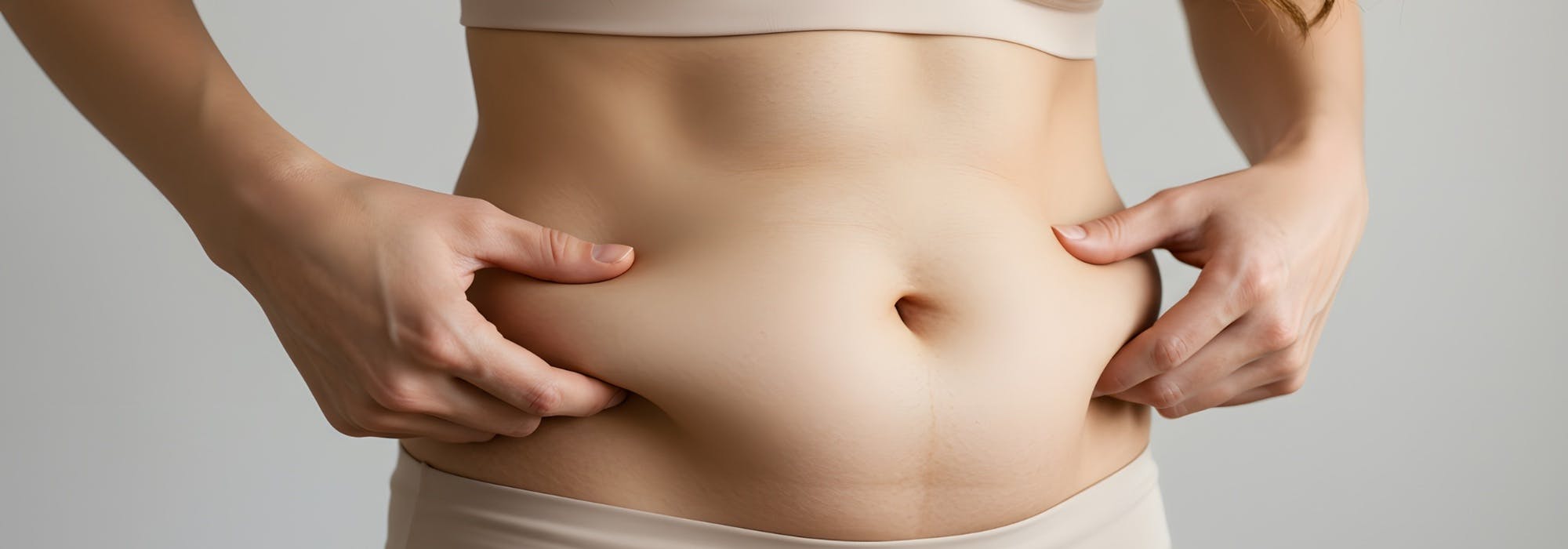
A FUPA refers to excess fat or loose skin in the lower abdominal area above the pubic bone, and it often persists despite diet and exercise. Depending on whether the concern is primarily fat, loose skin, or muscle separation, surgical options range from liposuction to a full tummy tuck or monsplasty. Our team at Aesthetx serves patients across the Bay Area from four locations and can help you find the approach that fits your anatomy and goals.
If you've been researching lower abdominal fullness, you've probably come across the term FUPA, which stands for "fat upper pubic area." It describes the soft, often protruding tissue located between the lower belly and the pubic bone, an area doctors sometimes call the mons pubis or lower pannus. It's a common concern, and one that frequently frustrates people who feel like they've done everything right.
The reason it's hard to address is that a FUPA isn't always just fat. Depending on what caused it, the tissue may involve stretched skin, weakened connective tissue, or muscle separation, none of which respond to cardio or calorie restriction the way localized fat does. That's not a failure on your part. It's anatomy.
Understanding what's actually happening in that area is the first step toward figuring out how to get rid of a FUPA effectively and whether surgery is even necessary for your situation.
Lower abdominal fullness or sagging develops for a number of reasons, and more than one factor is often at play.
Pregnancy and childbirth are among the most common causes. As the abdomen expands to accommodate a growing baby, the skin and underlying muscles stretch significantly. Even after delivering and losing the pregnancy weight, the lower abdominal tissue doesn't always snap back, particularly the skin. Hormonal changes during and after pregnancy also affect where the body stores fat, and the pubic region is often one of those deposits.
Significant weight loss, whether from lifestyle changes or bariatric surgery, is another major driver. Losing a large amount of weight is a genuine achievement, but it can leave behind excess skin that no amount of continued weight loss will eliminate. The skin has been stretched beyond the point where it can fully retract.
Aging naturally reduces skin elasticity over time, meaning the same tissue that might have rebounded in your twenties simply won't behave the same way at forty or fifty. Genetics plays a role as well. Some people are predisposed to storing fat in the lower abdomen regardless of their overall body composition.
Previous abdominal surgeries, including C-sections, can also alter the tissue architecture in ways that make the lower belly appear fuller or more prominent, even in patients who are otherwise slim.
This is one of the most common questions we hear, and it deserves a direct answer. If the concern is primarily excess fat and your skin still has reasonable elasticity, lifestyle changes can make a meaningful difference. Strength training, cardiovascular exercise, and a calorie-controlled diet can reduce overall body fat, including in the lower abdomen.
The honest reality, though, is that you cannot spot-reduce fat in one specific area. The idea of losing a FUPA in 30 days through targeted exercises is largely a myth. Core strengthening improves posture and muscle tone, which can subtly change how the area looks, but it will not selectively pull fat from the pubic region. And no exercise addresses loose skin.
If your FUPA is driven by skin laxity, stretched fascia, or a combination of fat and tissue changes after pregnancy or weight loss, exercise simply cannot produce the kind of structural correction that surgery can. That doesn't mean surgery is automatically the right answer for you, but it does mean that knowing what you're dealing with is more useful than following a 30-day workout plan and hoping for the best.
When a patient comes in asking about FUPA treatment, the first thing to assess is the ratio of excess fat to skin laxity in the area. Patients with excess fat and minimal skin laxity are typically good candidates for liposuction alone. Those whose primary concern is loose or sagging skin are better served by a pubic lift. When both are present, a combination of liposuction and a pubic lift is usually the most appropriate approach.
The right procedure depends on the specific combination of factors present: how much fat, how much skin laxity, whether there's muscle separation, and where the fullness is concentrated. There is no single best answer across the board.
Liposuction is the most straightforward option for patients whose primary concern is localized fat with good skin elasticity. Small incisions allow a thin cannula to suction out fat deposits, reshaping the contour without a significant scar. Recovery is typically faster than a tummy tuck, and the results can be excellent for the right candidate.
The limitation is that liposuction does nothing to address excess skin. In fact, removing fat under skin that lacks elasticity can sometimes make laxity more visible. Patient selection matters enormously here.
A mini abdominoplasty focuses specifically on the lower abdomen below the belly button. It's a good fit for patients who have a modest lower pouch, mild skin sagging, and don't need significant muscle repair. The scar is shorter than a full tummy tuck, and downtime is generally reduced. Many mini tummy tuck procedures also include limited liposuction for a more refined result.
For patients with significant skin laxity, pronounced muscle separation (diastasis recti), or a larger area of concern, a full abdominoplasty is often the most effective single procedure. It removes excess skin and fat from the entire lower abdomen, tightens the underlying muscle wall, and repositions the belly button for a natural-looking result.
This is a more involved surgery with a longer recovery, but it addresses all three components simultaneously, which is why it's frequently the best option for patients who've had major weight loss or multiple pregnancies.
A monsplasty specifically targets the mons pubis, the soft tissue directly above the pubic bone. Some patients develop fullness or sagging in this area independent of the broader lower abdomen, particularly after weight loss. A monsplasty removes excess tissue and can create a noticeably smoother silhouette. It's frequently performed in combination with abdominoplasty when both areas need attention.
Patients who get the most satisfying results from lower abdominal contouring tend to share a few things in common:
Patients considering surgery after pregnancy are generally encouraged to wait at least six to twelve months postpartum before consulting. The best way to confirm candidacy is through a direct, in-person assessment, not an online quiz or a general checklist.
Recovery varies considerably depending on which procedure you have, but there are consistent patterns worth knowing about.
|
Phase |
Typical Symptoms |
Activity Level |
Key Notes |
|
Week 1 |
Swelling, bruising, tightness, fatigue |
Very limited |
Gentle walking encouraged; improves circulation and reduces clot risk |
|
Weeks 2–3 |
Symptoms easing, soreness remains |
Light, desk work, and driving usually resume |
Compression garments required |
|
Weeks 4–6 |
Reduced swelling, easier movement |
Moderate, no strenuous exercise yet |
Strenuous exercise was cleared by the surgeon around week 6 |
|
Months 2–12 |
Residual swelling, maturing scars |
Gradual return to normal |
Final contour settles over 6–12 months |
At Aesthetx, lower abdominal contouring is one of the procedures our surgeons know in depth, and we approach it the same way we approach everything: by understanding what's actually happening with your body before recommending anything. Our excellent team of board-certified plastic surgeons works across four Bay Area locations, in San Jose, Menlo Park, Marin, and Walnut Creek, which means you can access our care wherever is most convenient for you.
Whether you're still deciding if surgery is right for you or you've already done your research and are ready to move forward, a consultation is the best next step. We'll take the time to assess your anatomy, walk through your options honestly, and help you understand what realistic results look like for your specific situation. Book your consultation now.