Contact Us Today Schedule a Consultation
Unsure where to begin? Our experts can guide you.
Book Now
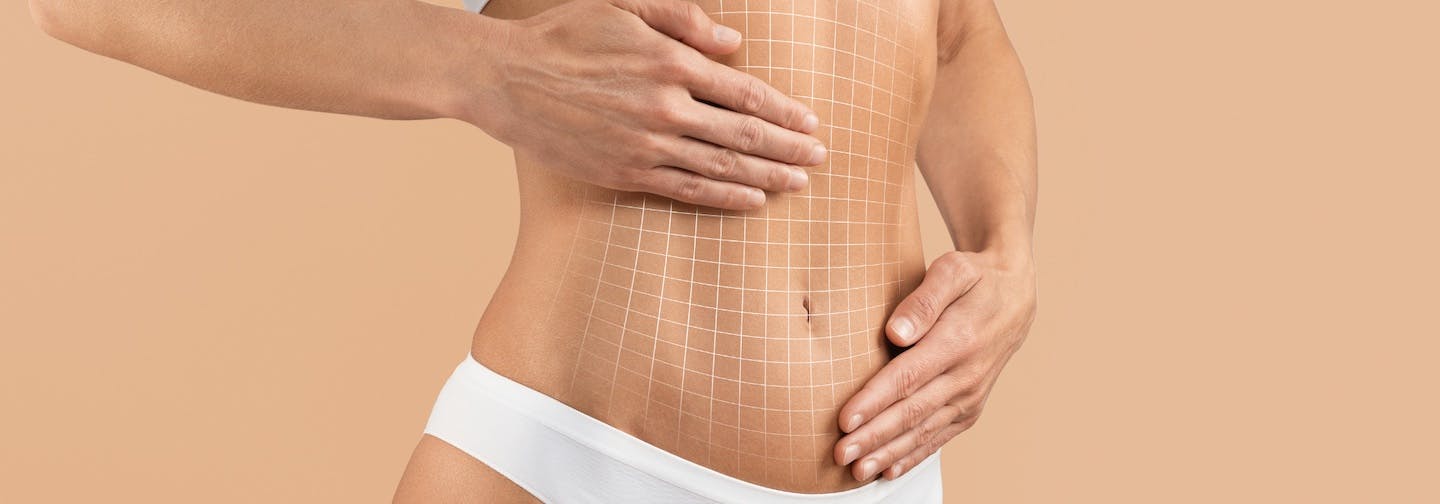
Liposuction removes excess fat through a cannula and works best when skin is still elastic and the abdominal muscles are intact. A tummy tuck removes excess skin and tightens separated abdominal muscles, addressing problems liposuction can't touch. Many patients need both, but the right starting point depends on which of those three issues, fat, skin, or muscle, is actually driving what you see.
If you've lost weight or had children and are still unhappy with your midsection, it's tempting to assume liposuction will finish the job. Sometimes it will. Sometimes it's the wrong tool entirely, and using it anyway can leave you with a result that still doesn't look the way you pictured. The difference comes down to what's actually causing the problem: fat, skin, or muscle.
Liposuction removes fat. A surgeon inserts a thin cannula through small incisions and suctions out fat cells directly, delivering permanent volume reduction in a single session. It works well when the remaining skin has enough elasticity to settle smoothly once the fat underneath is gone.
What it doesn't do: tighten loose skin or repair separated abdominal muscles. If either of those is part of your concern, liposuction alone won't resolve it, and removing more fat in that situation can actually make loose skin look worse, since there's less volume underneath to hold it in place.
A tummy tuck, or abdominoplasty, addresses two things liposuction can't: excess skin and separated abdominal muscles. During pregnancy, the abdominal muscles (the rectus abdominis) can separate along the midline, a condition called diastasis recti, and skin that's been stretched over months or years doesn't always snap back afterward.
The procedure removes the excess skin and surgically brings the separated muscles back together, restoring a tighter, flatter abdominal wall. Some fat is typically removed as part of the procedure, but that's secondary to the skin and muscle repair; it's not primarily a fat-removal surgery, the way liposuction is.
Pinch test aside, the real question is which of the three issues applies to you:
|
Liposuction |
Tummy Tuck |
|
|
Removes fat |
Yes, primary purpose |
Some, but secondary to skin/muscle repair |
|
Tightens loose skin |
No |
Yes |
|
Repairs muscle separation (diastasis recti) |
No |
Yes |
|
Incisions/scarring |
Small, minimal scarring |
Longer incision, typically hip to hip |
|
Anesthesia |
Local or general, depending on the extent |
General |
|
Recovery |
Shorter |
Longer |
Frequently! When both excess fat and loose skin or muscle separation are present, surgeons often perform liposuction alongside a tummy tuck in the same operation, sometimes called lipo-abdominoplasty. This is also a common component of a mommy makeover, where multiple concerns from pregnancy are addressed together rather than in separate procedures over time.
It's genuinely hard to tell from the mirror alone whether you're dealing with fat, skin, muscle separation, or some mix of the three, and guessing wrong means paying for a procedure that won't get you there.
At Aesthetx, our team examines your specific anatomy in a private consultation and tells you plainly which approach, or combination, will actually address what you're seeing, rather than defaulting to whichever procedure is easiest to sell.
Schedule a consultation and let's figure out the right plan for your body.