Contact Us Today Schedule a Consultation
Unsure where to begin? Our experts can guide you.
Book Now
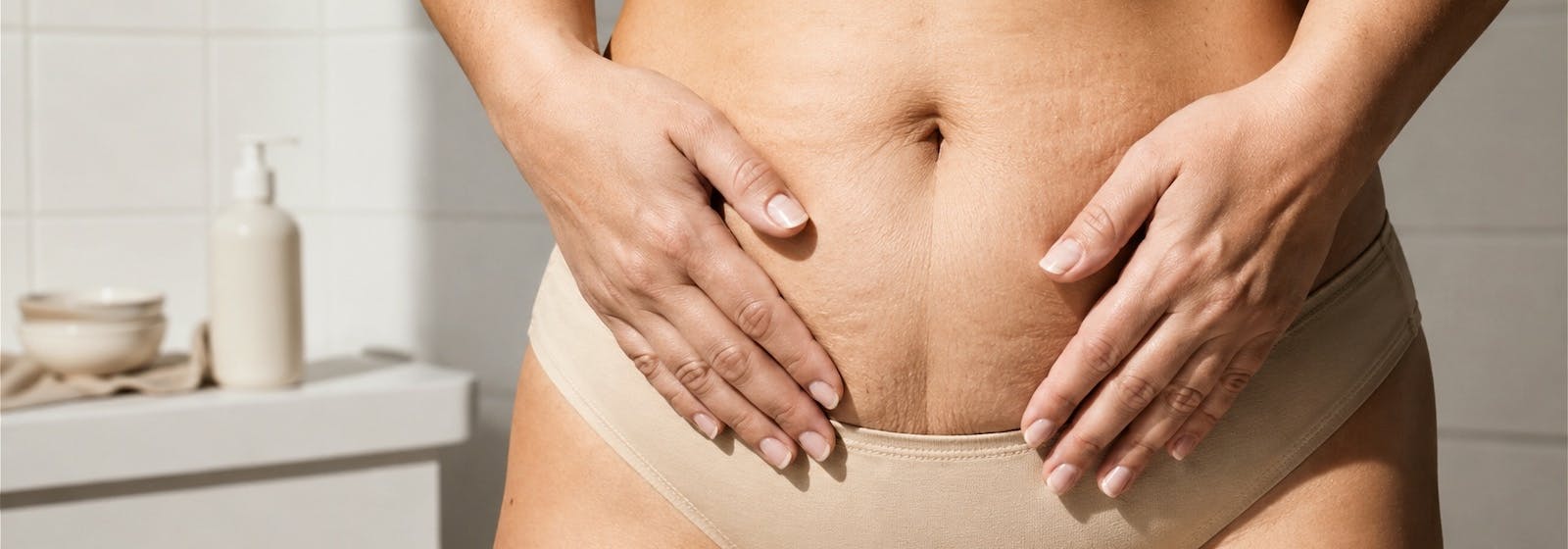
Bringing a baby into the world is life-changing, and so is your body. If you're wondering how to lose weight after giving birth in a safe, realistic way, you're not alone. No pressure. No extremes. Just smart, sustainable habits.
But here's what most postpartum weight loss guides won't tell you: diet and exercise can do a lot, but they can't do everything. Pregnancy changes your body in ways that no amount of clean eating or gym sessions can fully reverse. Stretched abdominal muscles, loose skin, loss of breast volume, and stubborn fat deposits that won't budge. That's where a postpartum body restoration, or more commonly known as a mommy makeover, comes in.
This guide will walk you through realistic timelines, nutrition, exercise, and how to know when it might be time to explore surgical options to help you feel like yourself again.
Most women safely lose postpartum weight over 6 to 12 months, not 6 to 12 weeks. Your body needs time to heal, rebalance hormones, and adjust to sleep changes.
Immediately after birth, you may lose 10 to 15 pounds from the baby, placenta, and fluids. The rest comes gradually. Healthy fat loss is about half a pound to one pound per week after your doctor clears you for exercise.
Your body built a human. Slow progress is not failure; it's biology.
Light movement can begin within days, but structured exercise usually starts at 6 weeks postpartum, or 8 to 12 weeks after a C-section. Always get clearance from your OB-GYN or midwife first.
During the first 2 weeks, stick with gentle walking and breathing exercises. From weeks 3 through 6, you can introduce light core activation and pelvic floor work. After 6 weeks, strength training, longer walks, and low-impact cardio are generally safe. After 12 weeks, you can begin a gradual return to higher-intensity workouts.
Avoid strict dieting in the first 6 to 8 weeks, especially if breastfeeding. Healing comes first.
The best postpartum diet focuses on nourishment, not restriction. Your body needs protein, fiber, healthy fats, and hydration to recover.
A simple way to think about your plate: fill half with vegetables, one quarter with lean protein, and one quarter with whole grains, then add a serving of healthy fat.
The best postpartum workouts focus on rebuilding core strength and total-body stability. Think of it in two phases.
Phase 1: Core and Pelvic Floor (Weeks 1 Through 6). This phase is about reconnecting with your deep core muscles. Focus on diaphragmatic breathing, kegels, glute bridges, and gentle stretching. These exercises may feel simple, but they lay the foundation for everything that comes after.
Phase 2: Strength and Low-Impact Cardio (After 6 Weeks). Once you're cleared, you can move into bodyweight squats, resistance band exercises, walking (stroller walks absolutely count), and light dumbbell training. Strength training is especially important during this stage, as it boosts metabolism and helps you tone safely.
You cannot spot-reduce belly fat, but you can rebuild your core and reduce overall body fat.
Postpartum belly often involves stretched abdominal muscles, possible diastasis recti, and hormonal fat storage. The approach that works is focusing on deep core activation (not crunches at first), strength training two to three times per week, managing stress, and sleeping when possible.
If you suspect diastasis recti, consider working with a pelvic floor physical therapist. They can assess your abdominal separation and give you targeted exercises to heal safely.
Breastfeeding can burn 300 to 500 extra calories daily, but results vary. Some women lose weight faster while breastfeeding. Others hold onto fat due to hormonal shifts. Both are completely normal.
The key takeaway here is not to cut calories drastically while nursing. Fueling your body properly supports both milk production and recovery.
Beyond diet and exercise, there are a few overlooked factors that can quietly stall your progress.
Eat slightly more protein than you think you need. Many new moms under-eat protein due to busy schedules and exhaustion. Increasing your protein intake improves recovery, preserves muscle, and naturally reduces cravings. This works because muscle tissue burns more calories at rest, so protecting and building muscle is one of the most effective things you can do for long-term fat loss.
Here's the reality that most postpartum weight loss guides leave out. You can eat well, train consistently, and reach a healthy weight, and still not feel like yourself. That's because some of the most common post-pregnancy body changes aren't about fat at all. They're structural.
Stretched abdominal muscles that won't come back together. Loose, sagging skin on the belly. Breasts that have lost volume, firmness, or symmetry after breastfeeding. Stubborn pockets of fat that refuse to respond to exercise. These are changes that diet and exercise simply cannot fix.
A mommy makeover is a combination of cosmetic procedures specifically designed to address the areas most affected by pregnancy and breastfeeding. It's fully customized to each patient, but commonly includes a tummy tuck to tighten the abdominal wall and remove excess skin, breast augmentation or a breast lift to restore volume and shape, and liposuction to contour areas where stubborn fat lingers.
The goal isn't to erase motherhood; it's to help you feel confident and comfortable in the body you have now.
One of the things we hear most from patients at Aesthetx is that their mommy makeover didn't replace their healthy habits; it supercharged them.
It closes the gap. When you've been working hard, but your body still doesn't reflect your effort, it can be discouraging. A mommy makeover addresses the structural changes that diet and exercise can't, getting you closer to the results you've been working toward. When you can actually see your progress, it becomes much easier to stay motivated.
It builds momentum. Seeing real improvement in the mirror, clothes fitting better, feeling strong and confident, creates a positive cycle. Many of our patients tell us that after their procedure, they feel a renewed drive to maintain their results through nutrition and exercise.
It changes your mindset. When results start to add up, your outlook shifts. Instead of feeling like the finish line is impossibly far away, you feel energized to keep going. That shift in attitude is one of the most powerful outcomes of a mommy makeover.
You may be a good candidate if you're done having children, finished breastfeeding, at or near a stable weight, and in good overall health. Most surgeons recommend waiting at least 6 months after your last pregnancy or after you stop breastfeeding before considering surgery, giving your body time to fully heal and stabilize.
A mommy makeover is a personal decision, and the right time looks different for everyone. The most important thing is that you feel ready, physically and emotionally.
Postpartum weight loss is not about "getting your body back." It's about building strength and confidence in your new season of life. For many women, diet and exercise get them most of the way there. For others, a mommy makeover is the missing piece that helps everything come together.
Your body grew a baby, delivered a baby, and is possibly feeding a baby right now. That deserves respect. And it also deserves whatever support helps you feel your best.
At Aesthetx, our board-certified surgeons create a personalized mommy makeover plan tailored to your anatomy, your goals, and your lifestyle. Whether you're just starting to explore your options or you're ready to take the next step, we're here to help. Connect with our team to schedule your consultation.