Contact Us Today Schedule a Consultation
Unsure where to begin? Our experts can guide you.
Book Now
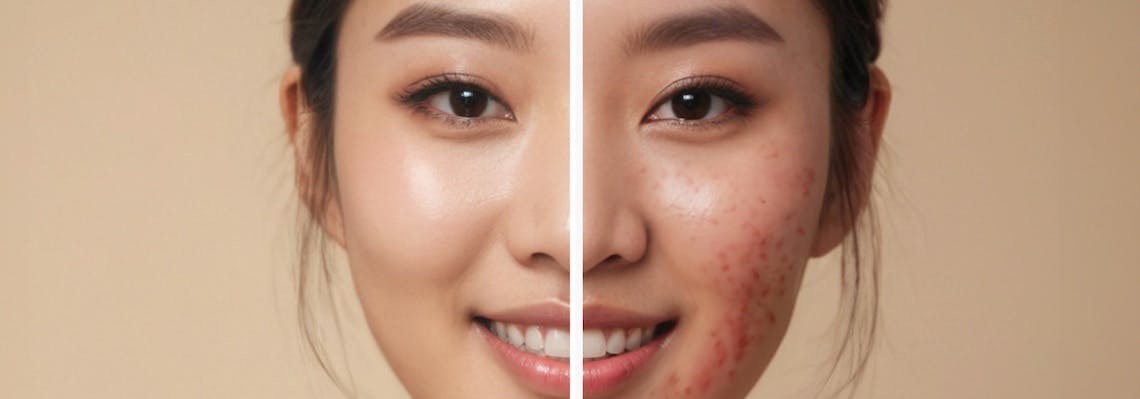
Some acne scars, particularly mild to moderate discoloration and post-inflammatory marks, do respond to consistent at-home care over weeks to months. True textural scars, like ice pick or boxcar scars, rarely fade without professional treatment. This article walks through what works, what does not, and how to set realistic expectations.
If you have spent any time searching for ways to remove acne scars naturally and quickly, you already know how many conflicting answers are out there. One source promises results overnight. Another says nothing works without a laser. A Reddit thread recommends retinol. A wellness blog insists lemon juice is the answer. It is exhausting and frustrating to sift through all this information, and most of it skips the one thing that actually matters: the type of scar you are dealing with.
Not all acne scars are the same, and that distinction changes everything about what you can realistically expect from a home routine. Some marks fade on their own with the right ingredients and patience. Others are structural, sitting deeper in the skin where no topical ingredient, however well-formulated, can reach them. Knowing which category your skin falls into is the single most useful thing you can do before buying anything or starting any regimen.
The type of scar you have determines whether natural methods are even a viable option. This is the step most guides skip entirely, and it is the reason so many people spend months on a routine that was never going to work for their specific concern in the first place. There are six main types, and they behave very differently.
|
Scar Type |
Appearance |
Depth |
Natural Methods Effective? |
|
Post-inflammatory hyperpigmentation (PIH) |
Flat dark or reddish-brown spots |
Surface-level (epidermis) |
Yes, mild cases often fade on their own over time. Consistent at-home care with AHAs can speed up fading and support fuller resolution. Can take months, and in some cases years, to fully clear. |
|
Post-inflammatory erythema (PIE) |
Flat pink or red marks, common in lighter skin tones |
Surface-level (upper dermis) |
Partially, responds slowly to targeted topicals. Consistent at-home care with targeted topicals can accelerate fading. Can take months, and in some cases years, to fully resolve. |
|
Rolling scars |
Wavy, uneven skin texture without defined edges |
Mid-dermal |
Minimally; may soften slightly with retinoids over time |
|
Boxcar scars |
Depressed pits with sharp, defined edges |
Mid-to-deep dermal |
Rarely; structural change is needed |
|
Ice pick scars |
Narrow, deep pits resembling enlarged pores |
Deep dermal |
No; require clinical procedures |
|
Hypertrophic or keloid scars |
Raised, firm, often red or purple tissue |
Superficial but structurally altered |
No; require medical intervention |
PIH and PIE are the most common concerns people bring to a dermatologist after breakouts clear. They are not true scars in the structural sense because the skin surface is still intact. Instead, these are color changes as a footprint left by inflammation in the skin. The depressed and raised types, however, involve physical changes to the dermis that skincare alone cannot reverse.
The honest answer is: it depends entirely on how severe the scar you have is and how you define 'remove.' For surface-level discoloration like PIH, consistent use of certain evidence-backed topical ingredients can produce meaningful improvement over many months. For textural scars involving lost or displaced tissue, natural remedies do not remove them. They may, at best, modestly soften their appearance.
The reason some topical ingredients work on PIH comes down to two biological processes: melanin regulation and cellular turnover. Excess melanin deposited after inflammation is what creates those dark spots. Ingredients that interrupt melanin transfer or accelerate the skin's natural shedding cycle can gradually lighten this discoloration. Vitamin C, niacinamide, and certain forms of retinoids all work through these mechanisms, and there is published research supporting their use on hyperpigmentation specifically. This process is not fast, so generally don't expect noticeable changes in days to a couple of weeks.
The limitation is that most at-home ingredients offer only modest structural change. Prescription-strength retinoids are the exception: they do stimulate collagen production and activate fibroblasts, but at a much slower and lower level than in-office devices. The data supports improvement in texture, mainly for mild scarring, and it takes considerable time and consistent use to see it. Understanding this boundary is not discouraging so much as it is clarifying.
Several ingredients have meaningful evidence behind them for surface-level scar fading. The key is matching the right ingredient to the right concern and using them consistently enough to see a result.
Vitamin C is one of the most well-studied topical ingredients for reducing PIH. It works by inhibiting the enzyme tyrosinase, which plays a central role in melanin production. The most bioavailable form is L-ascorbic acid, though it is also notoriously unstable and oxidizes quickly when exposed to air and light. Products stored in opaque, airless packaging tend to hold their potency longer.
Other vitamin C formulations have grown in popularity for their better tolerance in sensitive skin and greater stability in the bottle, meaning the first drop and the last drop both deliver a consistent dose. Alto, for example, is not L-ascorbic acid but is still effective for PIH.
Realistic timelines for visible improvement typically fall in the AT LEAST eight-to-twelve-week range when a serum is applied daily AS DIRECTED and paired with SPF. Without sun protection, hyperpigmentation is likely to persist or EVEN worsen regardless of what else you apply.
Retinol is arguably the most discussed ingredient in any conversation about acne scars, and the rising search interest in both retinoids and tretinoin reflects how much attention this category is getting. Retinol works by accelerating cell turnover, gradually bringing fresher skin to the surface and stimulating collagen production at the dermal level over time.
For PIH, retinol can meaningfully reduce discoloration with consistent use, typically over twelve to twenty-four weeks. For mild texture, there is modest evidence that it can soften the appearance of shallower rolling scars over a longer period. Over-the-counter retinol concentrations, however, are considerably lower than prescription tretinoin, since OTC retinol is converted to tretinoin in the body and is roughly 20 times weaker. The functional difference matters: at-home retinol may produce gradual improvement; prescription-strength tretinoin tends to work faster and more aggressively on both pigmentation and texture.
Niacinamide targets hyperpigmentation through a different pathway than vitamin C. It inhibits the transfer of melanin from melanocytes to keratinocytes, reducing the amount of pigment that actually reaches the skin surface. It is also exceptionally well-tolerated at low to mid concentrations (usually <4%), making it a good option for people with sensitive or reactive skin who cannot use higher-potency actives.
The evidence for niacinamide is solid for PIH, though it tends to work more slowly than retinoids. It is often used in combination with other actives rather than as a standalone treatment. Concentrations of 4 to 10 percent in serum form are generally what appears in the research, and it pairs well with moisturizing ingredients, which reduces any irritation from co-applied exfoliants or vitamin C.
These are the remedies that dominate DIY skincare content, and the reality is more nuanced than either camp typically admits. Aloe vera has legitimate anti-inflammatory properties and some limited evidence for supporting wound healing, which is different from reversing an established scar. It can soothe irritated skin and may help prevent further post-inflammatory darkening if applied during an active breakout. Calling it a scar remover, however, overstates the evidence considerably and most are disappointed.
Raw honey, particularly Manuka varieties, has antimicrobial and wound-healing properties that make it useful during the active healing phase of a lesion. As a remedy for old, established scars, the evidence is sparse.
Topical tranexamic acid is another option worth mentioning for PIH specifically. It works by disrupting the pathway that triggers melanin production and has a growing body of evidence supporting its use for post-inflammatory discoloration.
Visible improvement from at-home care takes longer than most content online will admit. The skin's natural cycle of cell renewal runs roughly four to six weeks in younger adults and slows with age. Meaningful, noticeable fading of PIH typically requires two to three full cycles of that process, which is why the eight-to-twelve-week range keeps appearing in the research.
|
Ingredient / Method |
Target Concern |
Realistic Timeline for Visible Improvement |
|
Vitamin C serum (daily) |
PIH, mild discoloration |
8 to 12 weeks of consistent use |
|
Retinol (nightly) |
PIH, mild texture |
12 to 24 weeks |
|
Niacinamide (daily) |
PIH, redness from PIE |
8 to 12 weeks |
|
SPF 30+ (daily) |
Prevents worsening; supports other actives |
Immediate protection; improvement is indirect |
|
Aloe vera / honey |
Active-phase soothing |
Limited evidence for established scar timelines |
One variable people underestimate is sun exposure. UV light directly stimulates melanin production, which means even a few minutes of unprotected sun each day can offset weeks of progress from a vitamin C or retinol routine. Daily SPF is not optional if the goal is fading discoloration. It is the foundation everything else builds on.
When a patient comes in frustrated that their at-home routine is not working after several weeks, the first thing to assess is whether the problem is the approach, the formulation, or simply the timeline.
Timeline is often the answer. These changes take time, and several weeks is rarely enough to judge whether an ingredient is working, particularly for pigmentation that formed over months.
Formulation and concentration matter just as much. Vitamin C is a good example: much of the cost difference between products comes down to research into stability and how much of the active ingredient actually reaches the skin. Small-batch products from unstandardized labs, however charming, may not deliver the concentrations used in the studies behind these ingredients' reputations.
Application routine is the next thing to check: what order products go on, how much is used, and how often. Retinoids are largely inactivated by sunlight, so they need to be applied in the evening, and consistent use of a smaller amount tends to outperform sporadic use of a higher potency.
Finally, assess the severity and depth of the pigmentation or texture change. Surface-level pigment tends to respond quickly to topicals, while deeper, dermal pigment can be stubborn and may need in-office treatment to reach the right layer of skin.
Several common habits actively work against scar improvement, and some of them are far more widespread than people realize. Sun exposure without protection is the most consistently damaging factor for PIH specifically. Melanin production ramps up in response to UV light, meaning existing dark spots can deepen even on overcast days if skin is left unprotected.
Picking or squeezing active breakouts is the primary driver of post-inflammatory marks in the first place. Even when a blemish has mostly resolved, manipulating the skin disrupts the healing process and increases the likelihood of pigmentation and textural change. It also introduces bacteria that can turn a minor lesion into a more significant one.
Overusing actives is another issue worth raising. Layering vitamin C, retinol, AHAs, and other exfoliants without adequate recovery time does not accelerate results. It creates a compromised skin barrier, which prolongs redness and sensitivity, and can paradoxically slow healing. A simpler, consistent routine with fewer TARGETTED AND TAILORED products generally outperforms an aggressive one that fluctuates based on product-of-the-week recommendations.
Lemon juice and other high-acid home remedies, as discussed earlier, also fit into this category. The appeal is intuitive, but the risk of further pigmentation from photosensitivity reactions is real.
Natural and at-home methods have a ceiling, and recognizing it early saves significant time and frustration. If you have been using a well-formulated routine consistently for three to four months and the marks have not meaningfully improved, that is a reasonable signal to seek a professional evaluation. The same applies if your scars have any textural component at all, which suggests structural involvement that topicals cannot address.
Several rising treatment categories are worth understanding as you consider professional options. Chemical peels, which have seen a significant surge in search interest, use controlled concentrations of acids to accelerate cell turnover and resurface the upper layers of skin. Superficial peels can meaningfully address PIH and mild textural concerns. Deeper peels, performed by a trained clinician, reach further into the dermis.
Microneedling creates controlled micro-injuries that stimulate the skin's natural collagen response. It is particularly well-suited to rolling and boxcar scars. Clinical studies have shown that adding PRP can make these results even better with faster recovery. Retinoids at prescription strength, specifically tretinoin, offer a more potent and better-evidenced option than OTC retinol for people whose skin can tolerate them. And laser treatments, ranging from non-ablative options to fractional resurfacing, are calibrated to scar depth and type in ways no at-home routine can match.
None of this is to discourage a home routine. For surface-level concerns, consistent at-home care remains genuinely effective. The combination of at home and in office is usually the best option! The distinction is knowing which category you are in before deciding how much time and effort to invest in either direction.
The clearest signal is when makeup can no longer cover the change, or when it actually draws more attention to it, whether that's a textural change or a deeper shift in color. That's a strong sign the scar has moved past what topicals alone can address.
Depth matters too. As covered above, surface-level pigment tends to respond to at-home care, while deeper, dermal changes are far more resistant to it.
Time is another marker. If several months of consistent, correctly applied treatment haven't produced improvement, that's a reasonable point to come in for an evaluation rather than continuing to wait it out.
The reality is that everyone does better with professional intervention, whether that means faster resolution or a more complete blurring of the scar than at-home care can achieve on its own.
Professional treatments work by targeting scar tissue at depths and with precision that topical products simply cannot achieve. The approach varies significantly based on scar type, skin tone, and the degree of textural versus pigmentary involvement. A thorough evaluation determines which option or combination of options makes sense for a specific patient.
|
Scar Type |
Common Clinical Treatments |
Mechanism |
|
PIH / PIE |
Chemical peels, laser toning, prescription topicals (tretinoin, hydroquinone) |
Accelerate turnover; suppress or redistribute melanin |
|
Rolling scars |
Microneedling, subcision, dermal filler |
Stimulate collagen; release tethered fibrous bands |
|
Boxcar scars |
Microneedling, fractional laser resurfacing, punch excision |
Resurface and remodel dermal tissue |
|
Ice pick scars |
TCA CROSS (chemical reconstruction), punch excision |
Chemically or physically restructure deep dermal channels |
|
Keloid / hypertrophic scars |
Steroid injections, vascular laser, silicone gel therapy |
Reduce collagen overproduction; flatten raised tissue |
One point worth emphasizing: darker skin tones require a different clinical calculus. Treatments that are appropriate for lighter skin types can trigger further hyperpigmentation in Fitzpatrick skin types IV through VI if not properly calibrated. A clinician experienced in treating diverse skin tones will adjust technique, energy settings, and recovery protocols accordingly. This is not a minor footnote; it is a meaningful factor in outcomes.
At Aesthetx, our team brings together dermatologists and aesthetic specialists across four Bay Area locations, including San Jose, Menlo Park, Marin, and Walnut Creek. We approach acne scarring the same way we approach every skin concern: with a thorough evaluation before any recommendation, and a treatment plan built around what your skin actually needs rather than a standard protocol.
If you have been working through a home routine and are ready to understand what else is possible, or if you simply want a clear picture of what you are dealing with before investing further, we are here for that conversation. Schedule your consultation.