Contact Us Today Schedule a Consultation
Unsure where to begin? Our experts can guide you.
Book Now
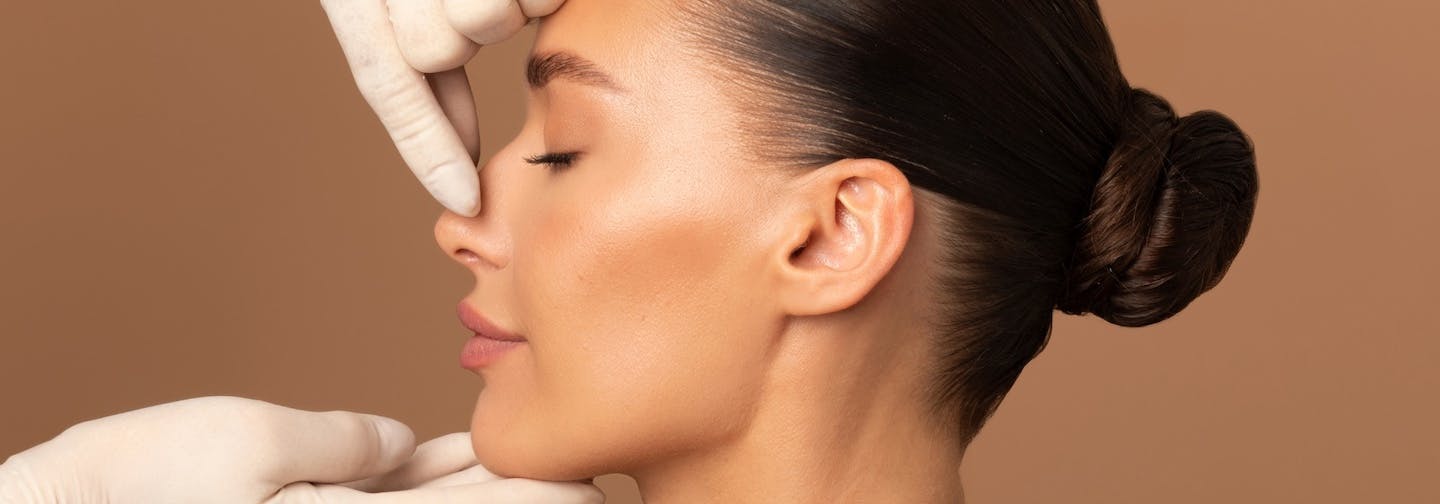
You've been looking at your nose in photos, maybe zooming in on the bridge or the tip, wondering if it's something you could actually change or if you're not "a good enough candidate" to bother asking. Candidacy for rhinoplasty comes down to a handful of concrete clinical factors, not a vague sense of whether your concern is valid enough.
In short: good rhinoplasty candidates are in stable overall health, have finished facial growth, don't smoke (or are willing to quit around surgery), and have a specific, describable concern. Surgeons also assess physical factors like skin thickness, dorsal height, and alar base width, since those determine what's surgically achievable. A consultation is the only way to confirm candidacy for your specific anatomy, but this guide will tell you where you likely stand first.
Surgeons generally wait until facial growth is complete before performing rhinoplasty, since operating on a nose that's still developing can lead to unpredictable results as growth continues. This typically means age 15-16 for girls and 17-18 for boys, though it varies by individual and is sometimes confirmed with an X-ray showing the growth plates have closed.
If you're an adult, this isn't a factor. If you're a teenager considering the procedure, it's the first thing a surgeon will ask about at a consultation.
Rhinoplasty is elective surgery under anesthesia, so candidacy depends on stable blood pressure, no uncontrolled bleeding disorders, and no active nasal or sinus infection at the time of surgery. Chronic conditions like diabetes don't automatically rule you out, but they need to be well-managed, usually with clearance from the physician treating that condition.
Smoking matters more here than in many other procedures, because nasal skin and cartilage rely on a delicate blood supply to heal correctly, and nicotine narrows that supply. Most surgeons require patients to stop smoking, vaping, and nicotine replacement for a set window before and after surgery, commonly several weeks on each side, and enforce it strictly because healing complications can change how the final result looks.
Beyond health and growth, the physical exam comes down to characteristics of your nose and face that determine what a surgeon can realistically change. Four factors come up in most thorough evaluations: skin thickness, dorsal height, alar base width, and overall facial proportion.
Skin thickness affects how visible surgical changes to the underlying cartilage will be. Thicker skin can mask fine refinements, so a subtle change to the tip or bridge might show up less dramatically than expected once healed. Thinner skin shows more definition but also shows minor irregularities more readily. Neither is a disqualifier, but it changes what a realistic outcome looks like and how a surgeon plans the surgery.
Dorsal height is the height and contour of the bridge. A pronounced hump, a flat or low bridge, or asymmetry along the bridge line each call for a different surgical approach, and a surgeon will evaluate the bridge from multiple angles (profile, three-quarter, straight-on) rather than a single view, since a bump that looks prominent from the side may look different from the front.
Alar base width refers to how wide the nostrils and the base of the nose are relative to the rest of the face. This matters for candidates whose primary concern is nostril flare or a tip that looks too wide from below. Correcting it typically involves alar base reduction, a specific technique with its own separate healing timeline from bridge or tip work.
Overall facial proportion is the factor that ties the others together: how the nose sits relative to the chin, forehead, and the rest of the face, not in isolation. A change that looks correct on the nose alone can look wrong on the face as a whole, which is why surgeons evaluate proportion before finalizing a surgical plan, not just the nose in isolation.
Not being a candidate today usually means "not yet," not "never." A few situations that commonly delay or rule out rhinoplasty, along with what typically happens next:
Still in active facial growth. Surgery usually waits until growth is confirmed complete. What to do: revisit the conversation at the age range noted above, or ask about a growth-plate X-ray if there's uncertainty.
Currently smoking with no plan to quit. Nicotine impairs healing enough that most surgeons won't operate. What to do: work with your doctor on cessation, then re-approach candidacy once you've hit the required nicotine-free window.
Uncontrolled chronic health condition. Unmanaged diabetes, uncontrolled blood pressure, or an unmanaged bleeding disorder increase surgical risk. What to do: get the condition stabilized with the physician managing it, then request medical clearance before scheduling.
Active nasal or sinus infection, or unhealed nasal trauma. Surgery on inflamed or actively healing tissue increases complication risk. What to do: let the infection or injury resolve fully, confirmed by your treating physician, before consultation.
Expectations centered on a specific look rather than a structural change. Wanting to resemble a specific photo, or hoping surgery will change how you feel about unrelated aspects of your appearance, is a mismatch for what rhinoplasty can predictably deliver. What to do: This is worth exploring with a surgeon directly. Many practices offer imaging or detailed consultation specifically to translate a vague goal into a concrete, achievable surgical plan, or to identify honestly where expectations and anatomy don't line up.
None of these are permanent disqualifications except the growth-plate timing, which resolves on its own with age. The rest are about sequencing: treat what needs to be treated first, then revisit.
|
Factor |
Generally Ready |
Worth Discussing Further at a Consult |
|
Facial growth |
Adult, or teen with growth confirmed complete |
Still in active growth years |
|
Smoking |
Non-smoker, or willing to quit for the required window |
Currently smoking with no plan to stop |
|
Health |
Stable, well-managed conditions |
Uncontrolled chronic condition or recent illness |
|
Concern |
Specific, describable feature |
General dissatisfaction, hard to pinpoint |
|
Expectations |
Structural change in mind |
Hoping for broader life or confidence change |
If you've read through this and most of it sounds like you, that's a good sign you're a reasonable candidate to explore further. The only way to know for certain is a consultation, where a surgeon examines your skin, bridge, nostril width, and facial proportions directly. The team at Aesthetx offers consultations built around exactly this kind of assessment, so you leave with a clear answer about candidacy and, if it's a fit, a specific surgical plan rather than a general one.